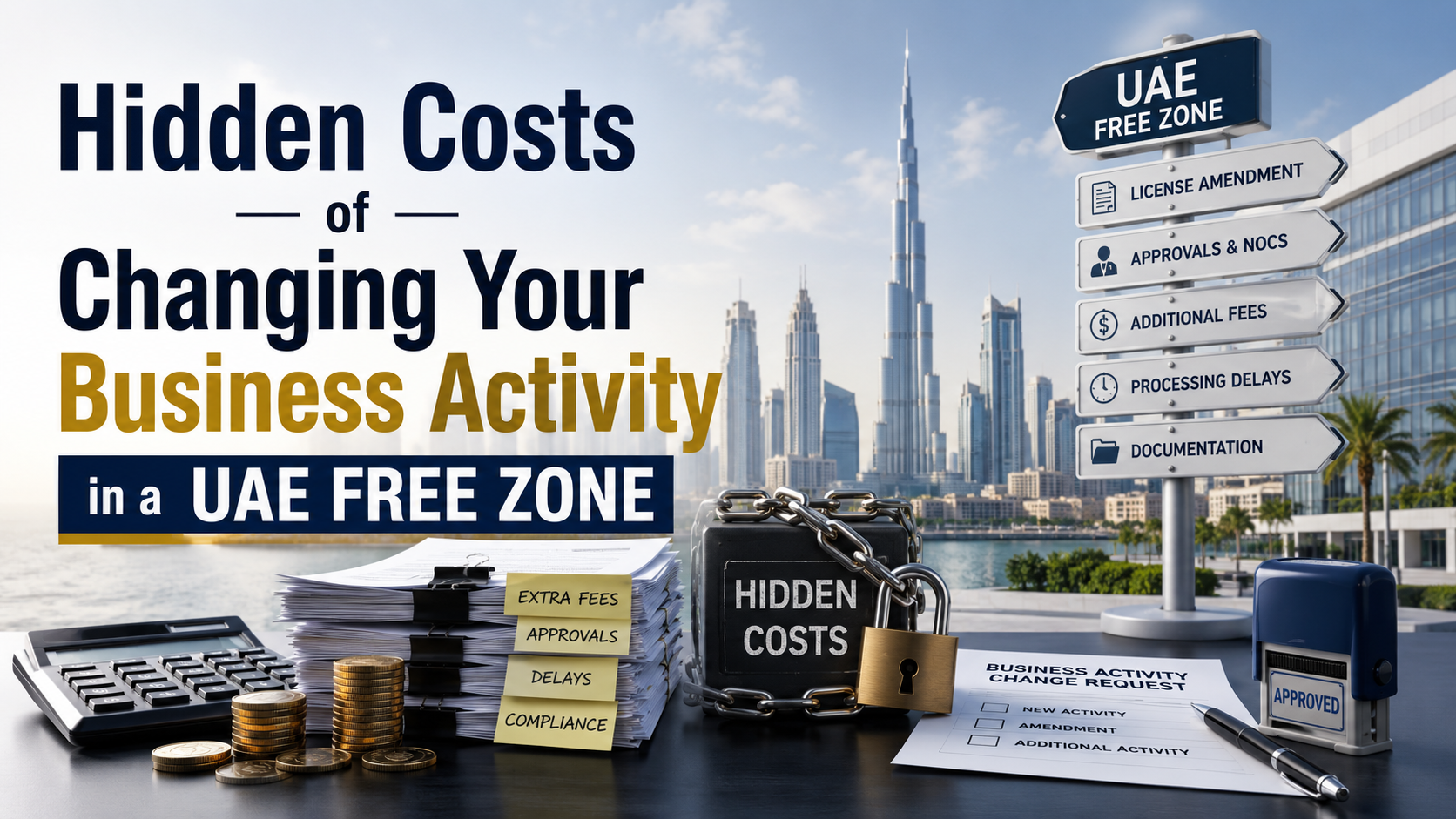
Introduction
Changing a business activity within a UAE free zone may appear straightforward. Many entrepreneurs assume it involves a simple amendment to their trade license and payment of a small administrative fee.
In practice, the process can trigger a series of direct and indirect costs that affect licensing, regulatory compliance, banking relationships, visa eligibility, insurance requirements, and operational continuity.
Whether a company is expanding into new services, pivoting its business model, adding commercial activities, or entering a regulated sector, understanding the full financial impact before submitting an amendment request can prevent unexpected expenses and delays.
This guide explains the often-overlooked costs associated with changing business activities in UAE free zones and provides practical insights for business owners, startups, investors, and corporate decision-makers.
Featured Snippet Answer
What are the hidden costs of changing a business activity in a UAE free zone?
The hidden costs can include:
- Activity amendment fees
- New license issuance charges
- Regulatory approvals
- Industry-specific compliance costs
- Additional office space requirements
- Banking and KYC updates
- Insurance adjustments
- Visa quota changes
- Professional advisory fees
- Contract modifications
- Business interruption during approval periods
While official amendment fees are usually visible, indirect compliance and operational costs often represent a larger financial burden.
Key Takeaways
- Business activity changes frequently require more than a simple license amendment.
- Regulated sectors may need external approvals from government authorities.
- Banking relationships can be affected by changes in business scope.
- Insurance policies often require updates after activity changes.
- Visa quotas and office requirements may be impacted.
- Certain free zones restrict combinations of activities.
- Operational delays can create significant indirect costs.
Understanding Business Activities in UAE Free Zones
A business activity defines what a company is legally permitted to conduct under its trade license.
Examples include:
- Software development
- Management consulting
- E-commerce
- Trading
- Manufacturing
- Marketing services
- Education services
- Financial consulting
Free zones generally maintain activity classifications that determine:
- Licensing requirements
- Regulatory oversight
- Office eligibility
- Visa allocation
- Compliance obligations
Changing activities may involve adding, removing, or replacing these classifications.
Direct Costs of Activity Amendments
License Amendment Fees
Most free zones charge administrative fees to modify existing licenses.
Common charges may include:
| Cost Category | Typical Impact |
|---|---|
| Activity amendment fee | Administrative processing |
| License reissuance | Updated license issuance |
| Registry update | Corporate records revision |
| Documentation review | Compliance review costs |
The exact amount varies significantly among free zones.
New Activity Approval Fees
Some activities require separate approval before they can be added.
Examples include:
- Healthcare-related services
- Financial services
- Education services
- Legal consulting
- Media production
- Food-related businesses
These approvals often introduce additional application expenses.
Regulatory Compliance Costs
External Government Approvals
A business entering a regulated sector may require approvals from relevant authorities.
Examples may include:
- Municipal authorities
- Industry regulators
- Financial regulators
- Education authorities
- Healthcare regulators
Each approval process may involve:
- Application fees
- Documentation costs
- Consultant fees
- Compliance audits
Compliance Documentation Expenses
Many businesses underestimate the cost of preparing required documentation.
Potential expenses include:
- Business plans
- Compliance manuals
- Operational policies
- Risk management procedures
- Data protection documentation
- Internal governance frameworks
These costs can exceed the actual amendment fee itself.
Banking-Related Hidden Costs
KYC and Compliance Reviews
Banks perform ongoing Know Your Customer (KYC) reviews.
A major business activity change can trigger:
- Enhanced due diligence
- Additional documentation requests
- Source-of-funds reviews
- Updated risk assessments
This process may delay account operations.
Potential Banking Restrictions
Certain activities are considered higher risk by financial institutions.
Examples include:
- Cryptocurrency-related services
- Payment processing
- Financial advisory services
- International trading
Consequences may include:
- Higher compliance scrutiny
- Delayed onboarding
- Additional monitoring requirements
Insurance Adjustment Costs
Many businesses overlook insurance implications.
Activity changes can affect:
- Professional indemnity coverage
- Cyber insurance
- Public liability insurance
- Employer liability insurance
Common Insurance Consequences
| Change | Possible Outcome |
|---|---|
| Higher-risk activity | Increased premiums |
| New service offerings | Policy amendments |
| Regulated activity | Additional coverage requirements |
| Expanded operations | Higher policy limits |
Office Space and Facility Costs
Some activities require physical premises meeting specific standards.
Potential consequences include:
- Larger office requirements
- Warehouse requirements
- Inspection fees
- Facility upgrades
For example:
A consulting company adding trading activities may need warehouse facilities or inventory storage arrangements.
Visa and Immigration Implications
Business activities often influence visa eligibility.
Potential impacts include:
- Revised visa quotas
- Additional employee requirements
- Occupation-specific approvals
- Labor compliance reviews
Companies may incur costs through:
- New visa applications
- Employee sponsorship changes
- Immigration documentation updates
Professional Advisory Costs
Legal Fees
Corporate lawyers may be required when:
- Updating constitutional documents
- Revising shareholder agreements
- Modifying commercial contracts
- Managing regulatory approvals
Corporate Service Provider Fees
Many businesses rely on consultants to handle:
- Application submissions
- Compliance documentation
- Authority correspondence
- License restructuring
Although optional, these services often accelerate approvals.
Contract and Commercial Costs
A change in business activities may require updates to:
- Client agreements
- Supplier contracts
- Distribution agreements
- Partnership arrangements
Potential expenses include:
- Legal review
- Contract drafting
- Renegotiation costs
Operational Disruption Costs
One of the most underestimated expenses is lost productivity.
Possible Business Interruptions
- Delayed project launches
- Paused client onboarding
- Regulatory waiting periods
- Internal restructuring
These indirect costs may exceed official amendment fees.
Common Risk Factors That Increase Costs
| Risk Factor | Potential Cost Impact |
|---|---|
| Regulated activities | High |
| Cross-border operations | High |
| Banking-sensitive sectors | High |
| Multiple license changes | Medium to High |
| Employee-intensive businesses | Medium |
| Simple service additions | Low |
Comparison Table: Simple vs Complex Activity Changes
| Factor | Simple Amendment | Complex Amendment |
|---|---|---|
| Processing time | Short | Longer |
| External approvals | Rare | Common |
| Banking impact | Minimal | Significant |
| Compliance burden | Low | High |
| Insurance changes | Limited | Extensive |
| Professional fees | Low | Higher |
How to Reduce Unexpected Costs
Businesses can minimize risk by:
- Reviewing free zone activity rules before applying.
- Confirming whether external approvals are required.
- Consulting banking relationship managers early.
- Evaluating insurance implications beforehand.
- Budgeting for professional advisory support.
- Assessing office and visa impacts.
- Preparing compliance documentation in advance.
Evidence-Based Business Insight
Across UAE business structuring projects, indirect compliance and operational costs frequently exceed the official amendment fee. The greatest financial risks usually arise from:
- Regulatory approvals
- Banking reviews
- Operational delays
- Insurance modifications
- Professional compliance support
Businesses entering regulated sectors tend to experience the highest total transition costs.
Suggested Internal Links
Consider linking internally to:
- UAE Free Zone License Renewal Guide
- UAE Corporate Tax Compliance Checklist
- Free Zone vs Mainland Business Comparison
- UAE Business Banking Requirements
- Trade License Amendment Process Guide
- UAE Employment Visa Requirements
- Data Protection Compliance in the UAE
Frequently Asked Questions
How much does it cost to change a business activity in a UAE free zone?
Costs vary depending on the free zone, number of activities being changed, and whether regulatory approvals are required. The total cost often includes administrative fees, compliance expenses, and advisory costs.
Can I add a new business activity without changing my company structure?
In many cases yes, provided the free zone permits the additional activity and all regulatory requirements are satisfied.
Will my bank need to be informed?
Generally yes. Significant changes in business activities often require updated KYC information and supporting documentation.
Can a business activity change affect my visas?
Yes. Certain activities influence visa quotas, employee classifications, and labor compliance requirements.
Are regulated activities more expensive to add?
Typically yes. Regulated sectors often require additional approvals, documentation, and compliance measures.
How long does the amendment process take?
Processing times vary widely depending on the free zone and complexity of the activity. Regulated sectors generally require longer review periods.
Can insurance premiums increase after changing activities?
Yes. Moving into higher-risk sectors or expanding services may result in increased insurance costs.
What is the biggest hidden cost businesses overlook?
Operational disruption and compliance-related expenses are often underestimated compared with official government fees.
Conclusion
Changing a business activity in a UAE free zone can create valuable growth opportunities, but the true cost extends far beyond the amendment fee shown on a regulator’s website. Regulatory approvals, banking reviews, insurance adjustments, office requirements, contractual updates, and operational disruptions can significantly affect overall expenditure.
Before initiating any amendment, businesses should conduct a comprehensive cost assessment that includes both direct fees and indirect compliance obligations. A proactive approach can reduce delays, preserve operational continuity, and support a smoother transition into new commercial activities.
Disclaimer
This article is provided for educational and informational purposes only and should not be considered legal, tax, regulatory, accounting, immigration, or investment advice. UAE free zone regulations, licensing requirements, and fee structures vary by jurisdiction and may change over time. Businesses should consult qualified legal, regulatory, tax, and corporate service professionals before making decisions regarding business activity amendments.
Leave a Reply